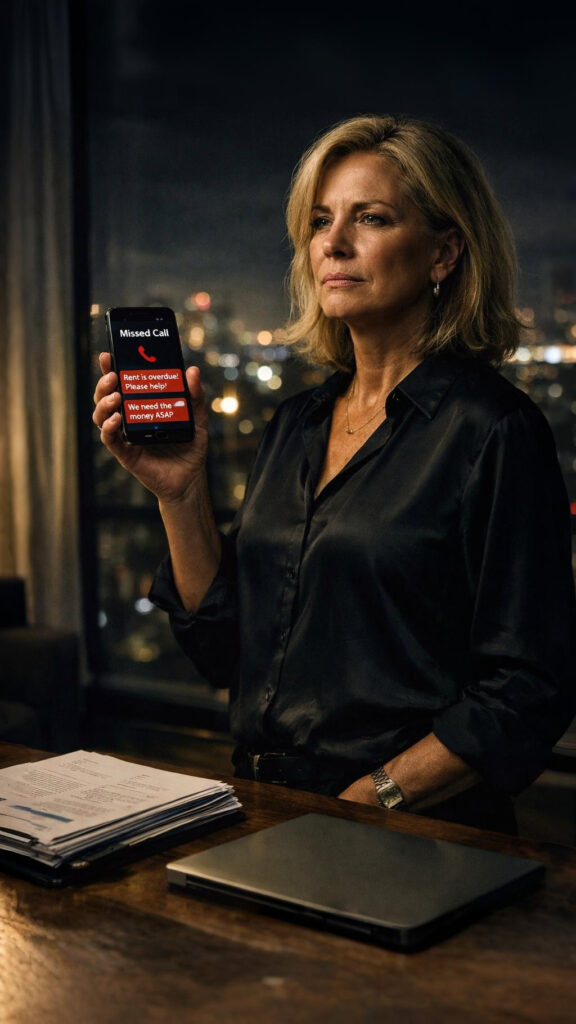
Chapter 1 — The Cruel Rejection
When the phone rang that morning, I wasn’t expecting anything special. My hands were still damp from washing the breakfast dishes, and the radio played softly beside me. My daughter-in-law’s name flashed on the screen, and for a brief, naïve moment, my heart fluttered with hope. Maybe she was calling to invite me to choose the flowers for the wedding. Or to ask about a family recipe.
I answered with a smile that no one could see.
“Hello, dear.”
Her voice came sharp and flat. “We got married yesterday.”
For a moment, I thought I’d misheard her. The words felt distant, like coming through water.
“Yesterday?” I repeated, my voice trembling. “But… I asked you last week when the date would be.”
She laughed. A short, dismissive sound that sliced through me.
“It was a small thing. Just for special people.”
Special people. The phrase echoed, slow and heavy, like a door slamming shut in my chest.
I didn’t know what to say. My throat burned, and all the air seemed to drain from the room. I managed a quiet, “I see,” before the line went dead.
The kitchen clock ticked. The radio whispered some cheerful tune. I stood there, still holding the phone, realizing that the day my son got married—my only son—I hadn’t even known it was happening.
Outside, the world moved as if nothing had changed. Children laughed in the street. A dog barked. Somewhere, someone watered their plants. But inside me, something quiet and fragile had cracked.
I sat at the table and stared at the empty cup beside the sink. The smell of coffee, now cold, clung to the air. For years I’d imagined that when this day came, I’d be there—standing in the front row, watching him smile at the altar, maybe crying a little when he kissed the bride. I used to picture his hand reaching for mine after the ceremony, whispering, “Thank you, Mom.”
But none of that had happened. Instead, I was alone in a kitchen full of silence.
I tried not to cry, but the tears came anyway, quietly, stubbornly, one after another. They left tiny dark circles on the wood of the table, like evidence of something that had once been alive.
Later, I looked for photos online. I shouldn’t have, but I did. And there they were—my son and his bride, radiant, surrounded by friends. The caption said “Perfect day with our favorite people.” I scrolled through every picture, searching for a trace of me, as if my love could appear in the background somehow.
It didn’t.
That night, I didn’t sleep. Every sound in the house seemed louder than usual—the hum of the refrigerator, the wind against the window, the ticking of that same merciless clock. I thought of the years I’d spent alone after my husband died, raising our boy, making sure he never lacked for anything. I had given him everything I could, sometimes more than I had. And now, he had built a new life that had no place for me in it.
When the morning came, I forced myself out of bed, as if moving could push the ache away. I cooked breakfast for one, the way I’d done for years, but the food had no taste.
Then, as if the universe wanted to remind me how little I mattered, a message appeared on my phone from my daughter-in-law again. No greeting. No warmth. Just words that stung in their simplicity:
“The rent is due. Did you transfer it?”
I stared at the message, disbelief flooding my chest. After excluding me from their joy, she still had the nerve to ask for money. My fingers hovered above the screen. For a long time, I didn’t type anything.
Finally, I set the phone down.
It buzzed again—a follow-up text. “Hello? We’re waiting.”
I looked at the sunlight stretching across the table, turning everything golden and sharp. Something inside me shifted, so slightly I almost didn’t notice. A quiet voice whispered, Don’t answer yet.
I didn’t.
For the first time, I let her message sit there, unanswered. My silence felt heavy, but also strangely powerful, like the beginning of something I couldn’t name yet.
I stood by the window and watched the street below. Children still laughed, the dog still barked, the world still moved. But inside me, the noise had changed.
It was no longer the sound of breaking.
It was the sound of waking up.
Chapter 2 — The Weight of Sacrifice
The silence after that message lasted longer than I expected. It lingered through the night, through the following morning, and into the next day, until it became a kind of companion. I didn’t reply, not out of anger at first, but because I didn’t know what words could possibly fit. How do you answer someone who’s already decided you’re disposable?
I went about my routine mechanically. The kettle hissed. The clock ticked. I folded laundry that had no one’s name on it but mine. In the small mirror above the sink, I barely recognized the woman staring back. There were traces of who I used to be — the mother who ran through rain to bring her son’s forgotten lunch to school, the woman who saved every extra coin for his piano lessons, the one who worked late shifts after her husband’s death so the boy would never feel the weight of the word orphan.
All those years condensed into lines on my face. Every wrinkle, a receipt of what I had given.
I remembered the smell of fresh paint from his first apartment. I had helped him clean that place from top to bottom before he moved in with her. My hands still carried faint scars from scrubbing old tiles, from holding heavy furniture, from building his new life piece by piece. He said, “Don’t tire yourself, Mom,” but I stayed anyway, smiling, proud that he needed me.
That’s what I believed then — that love was measured by how much you could give without keeping score.
But now, alone in the same kitchen where I’d once waited for his phone calls, I began to wonder how many times I’d confused sacrifice with devotion. Maybe they had become the same thing somewhere along the way, a currency I spent without realizing I was going bankrupt.
I walked through the house, touching small reminders of him — the photo on the shelf from his graduation, the mug with a chipped handle he used to favor, the faded note he wrote me years ago: “Don’t forget to eat, Mom.” I had kept that note folded in my wallet for over a decade, as if it could still feed me.
And yet, the boy who once worried if I ate had married without a single word to me.
I thought back to the beginning — the long years after my husband’s passing. There were bills that didn’t wait, nights when dinner was just rice and tea, and mornings when my eyes stung from lack of sleep. Still, I worked. I cleaned offices before dawn and stitched fabric under the dim light of a small lamp. Every cent I earned went toward his education, his comfort, his future.
I counted the sacrifices once, out of curiosity.
Twenty-three years of uninterrupted work.
Eighteen birthdays spent without celebration because he had exams or part-time shifts.
Seven times I borrowed money to cover his tuition.
Zero times he asked me if I was okay.
Numbers don’t lie. They strip everything down to truth.
But love is not arithmetic. Love is giving until you forget there was ever a choice.
The phone rang again that afternoon. This time, it was him. My son. For a moment, hope stirred again, foolish and persistent.
“Mom,” he began, his voice cautious. “You didn’t send the rent yet. Everything okay?”
I wanted to say so much. That I saw the photos. That I knew. That his silence on that day had hurt more than any wound time could heal. But the words tangled in my throat.
“I’m fine,” I said instead. “Just thinking.”
“Thinking?” he laughed lightly. “Don’t think too much, Mom. Just transfer it when you can.”
And then he hung up.
I stood there, the phone pressed against my chest. I could almost hear the echo of his childhood laughter, the way he used to run into my arms after school, clutching small drawings made with crayon and love.
How strange that time could turn tenderness into transaction.
That evening, I opened my old ledger — the one I’d used for years to track expenses. Every page told a story: rent, groceries, school fees, medicine. His name appeared again and again, written in my neat, tired handwriting. I realized I had been keeping a record not just of numbers, but of devotion itself.
I closed the book slowly. My hands trembled, not from age, but from the weight of understanding. Every sacrifice I’d made had been a thread woven into a net — one that caught him safely for years but left me trapped inside it.
In the quiet of the room, I whispered to no one in particular, “How did it come to this?”
The clock didn’t answer. It only kept moving, indifferent, marking the seconds of a life that had slipped by in service of another.
I made tea and sat by the window. Outside, a pale moon hung over the rooftops. Somewhere, far away, my son was probably laughing, living his new life — a life I had built, yet was no longer part of.
And still, despite everything, my heart refused to harden completely. That was the cruelest truth of all.
Because even after betrayal, a mother’s love doesn’t vanish.
It lingers quietly, like a candle that refuses to die, even when the room is already dark.
Chapter 3 — The Awakening of Dignity
The next morning began quietly, like any other, yet something felt different. The air in the house seemed lighter, as if it no longer belonged to the same woman who had spent decades living for others. I stood by the window, watching the world move on its usual rhythm—neighbors hurrying to work, a child tugging his mother’s hand, a man walking his dog. Life kept going, indifferent to heartbreak.
I held a cup of coffee that had already gone cold, but I didn’t care. My mind was somewhere else—turning over thoughts that had been buried too long.
For years, I’d lived by the same rule: give, give, give, and maybe someday they’ll see your worth. It was what my own mother had taught me without saying a word. But now, standing in that same kitchen where I’d once cried over forgotten birthdays and unanswered calls, I realized something unsettling.
They had seen my worth. They had simply chosen to use it.
That realization didn’t come like a thunderclap. It came quietly, like the slow dawn after a long night. A whisper more than a shout.
I went to the cabinet and opened the small metal box where I kept receipts, bills, and records of every transfer I had made for my son over the past years. The papers were neatly stacked, but as I flipped through them, my hands began to shake. Each document felt heavier than the last—proof of every time I had been too afraid to say no.
Rent. Tuition. Deposits labeled “just temporary help.” Even their honeymoon tickets had passed through my account.
I traced the ink on one receipt and whispered, “No more.”
The sound startled me. My own voice, firm yet unfamiliar.
For a long moment, I stood there, surrounded by papers, memories, and the faint hum of the refrigerator. I felt something shifting deep inside—an old door creaking open after years of silence. It wasn’t anger, not exactly. It was recognition.
I wasn’t weak. I was tired.
And tiredness can turn into power once you stop apologizing for it.
I turned on the radio, hoping to drown my thoughts in background noise. A cheerful song played, the kind you’d hear in a waiting room or supermarket. I smiled bitterly. How strange, I thought, that the world could be full of music while my own heart was just learning to breathe again.
The phone rang around noon. I didn’t even have to look to know who it was.
“Hello?”
“Mom,” my son said, his tone already impatient, “the rent’s still unpaid. She’s worried. Could you just handle it today?”
I hesitated. Old habits tugged at me like invisible threads—reflexes built from years of saying yes before even thinking. But this time, something inside me held firm.
I breathed slowly and said, “Didn’t I tell you?”
He paused. “Tell me what?”
“That I only do things for special people.”
The silence on the line stretched until I could almost hear his confusion turn into disbelief.
“Mom, what’s that supposed to mean?”
I didn’t answer right away. I looked around the kitchen, the morning light pouring through the curtains, touching every familiar surface. This house had heard my grief, my laughter, my waiting. It had seen me bend over backwards for people who barely looked back. Now, it was witnessing the moment I stopped.
“It means,” I said quietly, “I’m done being treated like I don’t exist.”
He started to protest, his words tumbling—“You’re overreacting,” “It’s not what you think,” “She didn’t mean it that way”—but none of them mattered. I listened without really hearing, the way you might listen to distant thunder. Then I said, softly but firmly, “You should have called me before your wedding, not after.”
And I hung up.
My hand trembled as I set the phone down. The silence that followed wasn’t heavy—it was clean, like a room after a storm.
I walked outside for the first time in weeks. The air smelled faintly of rain, and the sky stretched wide and endless above me. I hadn’t realized how small my world had become—kitchen, bedroom, grocery store, bank. The routine of a life reduced to waiting for someone else’s approval.
I passed a bakery and saw a sign in the window: Homemade pies—baked fresh every morning. I went inside on a whim. The girl behind the counter smiled and asked what I’d like.
“I’m not sure,” I said, scanning the display. “It’s been a long time since I bought something just for myself.”
She laughed gently. “Then it’s time to start.”
I chose an apple pie, warm and fragrant. When I sat at the small table by the window, I took the first bite slowly, deliberately. It tasted like something simple and honest. Like freedom disguised as dessert.
As I ate, I thought about what might come next. Maybe they’d call again, angry this time. Maybe they’d send messages filled with guilt and accusation. But for once, the thought didn’t scare me.
Because I had already survived the worst thing a mother can feel—being forgotten. Everything after that was just noise.
That evening, I went home, brewed tea, and turned off my phone. I sat by the open window, watching the city lights shimmer in the distance. My hands, once steady from years of work, now rested quietly in my lap.
I wasn’t waiting for an apology anymore. Or a message. Or permission to exist.
For the first time, I was simply waiting for nothing.
And that felt like the beginning of everything.
Chapter 4 — The Silent Retaliation
The day after I hung up the phone, I expected regret to come creeping back like an old habit. But it didn’t. The silence that followed felt clean, deliberate, almost sacred. I woke up early, opened the curtains, and let the sun fill every corner of the room. For once, it didn’t feel like it was shining on an empty life. It felt like it was shining on mine.
I made coffee, but this time, I didn’t rush. The kettle’s whistle wasn’t a command anymore; it was a small song. The same kitchen that had witnessed years of quiet servitude now held something else—an unfamiliar peace.
When the phone rang again, I didn’t flinch. I let it buzz on the counter, over and over, until it stopped. Then it started again. And again. The persistence almost made me smile.
By the third call, I picked it up.
“Mom! Finally!” my son’s voice burst through the line. “Why haven’t you answered? She’s furious! The rent is past due. You said you’d—”
“I said I’d think about it,” I interrupted.
He fell silent for a moment, as if the word itself didn’t make sense coming from me.
“You’re really going to do this?” he asked. “You’re just going to let us struggle?”
I looked at the small plant on my windowsill—its leaves reaching toward the light, patient, alive. I watered it every morning, yet it never demanded more than what it needed.
“I think,” I said slowly, “you’ll manage just fine without me.”
He sighed. “You don’t understand, Mom. We’re under pressure. The landlord—”
“I understand perfectly,” I said. “You’re adults. Married now. That’s what you wanted. Independence. Remember?”
His tone hardened. “Why are you acting like this? You’re not yourself.”
I smiled to myself. “That’s the point, dear. I’m finally not.”
He said something else, sharp and defensive, but I barely heard it. The noise of the street outside, the faint rhythm of passing footsteps, all of it felt more important than his excuses.
I ended the call gently, without anger.
And that was it. My first real no.
It didn’t echo like guilt; it settled like peace.
The next few days unfolded quietly. The phone buzzed less and less, as though even their resentment was running out of energy. I filled the silence with small rituals—watering my plants, walking through the park, greeting the same vendor at the corner fruit stand.
One afternoon, while sorting through old drawers, I found an envelope stuffed with old receipts—money I’d sent him over the years. I laid them on the table, one by one, like relics of another life. Each one told a story of surrender disguised as love.
Rent, repairs, emergencies, “just until next month.”
I picked up the last one, the paper yellowed and soft around the edges. The date was only a year ago. I had written “for them” in the corner, as if that small note could justify everything.
I didn’t need those papers anymore. I tore them gently, piece by piece, into the trash. It wasn’t anger that guided my hands. It was release.
Later that week, I saw them by accident. I had gone to the supermarket, and there they were at the end of the aisle—my son pushing a cart, his wife beside him, talking fast, her face tight with irritation. They hadn’t noticed me. I could have turned away, hidden behind a shelf. But I didn’t.
I walked past them slowly, my posture straight, my steps calm. For a second, our eyes met. His expression flickered—shock, maybe guilt—but I just nodded politely and kept walking.
That small gesture, that simple act of walking past them without shrinking, felt like thunder in my chest.
At home that evening, I sat by the window again, watching the sunset bleed across the sky. There was a strange beauty in endings—the way light fades, not in defeat, but in completion.
I thought about the woman I had been: the mother who had built her entire existence around being needed. The woman who once equated silence with failure, who mistook giving for love. That woman had lived her life in the shadows of others’ comfort.
But she was gone now.
In her place sat someone new. Someone who didn’t need permission to rest, to breathe, to say no.
The phone stayed silent that night. I could almost imagine them on the other end—confused, angry, maybe even afraid. The balance had shifted, and they didn’t know how to reach me anymore.
I poured myself a glass of wine, something I hadn’t done in years. The first sip burned slightly, but it felt honest. Real.
I raised the glass toward the empty room. “To peace,” I whispered.
And in that quiet toast, I felt it—the subtle but certain shift of power.
They had taken my love for granted, thinking it was endless. But now, I understood something they didn’t. Love isn’t infinite when it’s one-sided. It’s a well that runs dry if no one bothers to refill it.
The next morning, I woke before dawn. The city was still asleep, and for a moment, it felt like the world belonged only to me. I wrapped myself in a shawl, made tea, and sat on the balcony, watching the first light stretch across the rooftops.
For years, I had started my days waiting for someone to need me. But now, I was waiting for nothing—and that nothing was freedom.
I took a slow sip and smiled.
Sometimes revenge doesn’t need to be loud.
Sometimes, it’s as soft as silence and as powerful as finally choosing yourself.
Chapter 5 — The Escalation of Conflict
The calm never lasts long. It never does when people lose control of what they once owned. By the end of the week, the silence I had built around myself began to crack—not from doubt, but from intrusion.
It started with messages. Dozens of them. Short, sharp, and urgent.
“You’re being cruel.”
“We’re family.”
“Don’t make this harder than it needs to be.”
Each one arrived like a small knock against my resolve, but none of them landed where they used to. I didn’t reply. My silence was my boundary, and for the first time, I didn’t feel the need to defend it.
But then, one evening, there was a real knock at the door.
I froze, halfway through folding laundry. I knew before I opened it who it would be.
When I did, they were both standing there—my son and his wife, side by side, like an accusation made flesh.
She was the first to speak. Her tone was sweet, practiced, the kind people use when they’re trying to sell something. “We thought you might be lonely. You haven’t been answering.”
I looked at her. “I’ve been busy.”
“Busy?” she repeated, as though the word offended her. “Doing what, exactly?”
“Living,” I said simply.
My son sighed, rubbing his forehead. “Mom, come on. This is ridiculous. We’re not enemies. We just need some help, that’s all.”
“You’ve always needed help,” I replied quietly. “And I’ve always given it.”
He shifted uncomfortably. “Well, what’s changed?”
“Me.”
The word hung there, small but solid, between us.
For a moment, none of them spoke. I could feel her eyes on me—sharp, calculating. Then she smiled, the kind of smile that hides a bite. “I understand. Maybe you’re… confused. It happens at your age. Stress, medication—sometimes people start making poor decisions.”
I felt something cold press against my chest, but I didn’t let it show.
“My decisions,” I said slowly, “are the first ones that are truly mine.”
She turned to my son, feigning concern. “See? She’s saying strange things. I told you something wasn’t right.”
He hesitated. “Mom, maybe we should—”
“No,” I said, cutting him off. “You don’t get to decide what’s right for me anymore.”
Her smile vanished. “You’d really rather let us struggle than do your duty as a mother?”
“My duty,” I said, “was to raise you. Not to finance your life.”
For a heartbeat, everything stopped. Even the ticking clock on the wall seemed to hold its breath.
Then she exhaled sharply. “Fine. But don’t expect us to come running when you need help later.”
“I won’t,” I said. “I’ve learned not to.”
They left after that—no hugs, no parting words, only the sound of the door clicking shut behind them. The echo lingered in the air, but it didn’t hurt as I thought it would. It was final, yes, but freeing.
That night, I sat in my armchair, the same one I used to occupy while waiting for their visits that never came. The quiet wasn’t lonely anymore. It was earned.
But peace is fragile.
A few days later, an envelope appeared in my mailbox. My name, written in neat but unfamiliar handwriting. Inside, a notice—legal, formal, cold. They had tried to claim I was unfit to manage my own finances. That I needed oversight. Guardianship.
I laughed at first. The sound startled me—it came out broken, like a bark. Then I read it again.
They were serious.
That night, sleep wouldn’t come. I lay awake, staring at the ceiling, counting all the ways people can betray without drawing blood. Words. Papers. Accusations dressed as concern.
But I didn’t cry. I couldn’t. Something inside me had shifted too deeply for tears.
The next morning, I made an appointment with a lawyer. His office smelled faintly of dust and coffee, and his glasses kept sliding down his nose. He listened quietly as I explained everything, from the wedding I hadn’t been invited to, to the message that began it all.
When I finished, he nodded slowly. “You’ve done nothing wrong,” he said. “But they’re trying to paint you as dependent. We’ll stop that.”
For the first time in a long while, I felt something warm—relief, maybe, or pride.
He gave me a list of documents to gather—bank statements, letters, receipts. Proof that I was still capable, still independent. I went home and spent hours sorting through drawers, folders, boxes. My hands were steady. My back ached, but I didn’t care. Every paper I placed into the pile felt like a piece of armor.
That evening, I caught my reflection in the mirror. There were lines on my face I hadn’t noticed before, but they no longer looked like cracks. They looked like strength carved by time.
They thought they could silence me with fear. But fear had already done its worst. What could they possibly take that they hadn’t already stolen years ago?
I closed the binder of documents, neat and complete. My defense was ready.
When I turned off the light, the room sank into darkness, but I didn’t feel alone.
For the first time in years, I wasn’t living for someone else’s comfort.
I was living for my own survival.
And it felt like the beginning of a war I was finally prepared to win.